Skin types and appropriate skincare
People, especially teenagers, are very easily influenced by social media. When they see their favorite influencer on tik tok, using a viral skin care product that promises glass like skin, and invisible pores, they all rush to purchase it, expecting the same results, and even better. But way too often, people get dissatisfied with the effect and can sometimes even get breakouts. In nearly all cases, when this happens, the main issue is not the brand, or the influencer that recommended it, but the fact that the product did not fit one’s skin type. There are five main skin types: oily, dry, combination, sensitive, and normal. Out of all of them, the most common ones are combination, with approximately 41%, and oily, with around 50%. This article will be talking about: how to identify which skin type you have; the appropriate morning/night skincare used with each type; and tips (maybe change) on how to get your skin look the best.
The first skin type that I will talk about is- oily skin. Oily skin results from excessive production of sebum which is an oily substance made in glands of the skin. Even though sebum helps maintain a strong skin barrier and hydrate the skin, excess supply of it has its downsides. Sebum can be caused by stress, genetics, weather, and hormones. When too much sebum is made, the skin may become shiny, and you can have a greasy feeling. This especially applies to the forehead, nose, and chin areas- also known as the T-zone. Too much oil can clog your pores, making owners of oily skin vulnerable to blackheads, acne, and enlarged pores. Another sign of oily skin is it might look dull, due to dead skin cells, and excessive amount of sebum, which interferes with how light bounces off the skin.
When it comes to skincare, a big misconception is that using drying toners and cleansers, with aggressive chemicals, will reduce the amount of sebum. Instead, it will have the opposite effect, since the skin will try to compensate for the sebum that got stripped out of the skin, making the problem worse. Here is a variation of morning and nighttime skin care routines that will help to control sebum production.
Morning skin care: Start your morning with an oil-free cleanser. Often owners of oily skin, besides sebum overproduction, might come across visible blood vessels/redness (see picture 1), so when choosing a cleanser, look for the one that applies to your concerns. There are two main types for oily skin: ones that control sebum productions, and ones that reduce blood vessels/redness visibility. Next, after cleansing, use a toner that will help repair the lipidic layer of the skin, after it has been removed from the face wash. Then, apply a product with gentle chemicals, like salicylic acid, or with antibacterial ingredients like, benzoyl peroxide, to reduce sebum production and bacterial growth. In a lot of cases, when buying these acids, they come in the form of a moisturizer, so there is no need to buy a separate one, unless you already have one. Your last step should be applying oil-free spf, because chemicals make the skin prone to UV rays, increasing the chance of getting hyper-pigmentation.
Night skin care: To start your night routine, first cleanse the skin with a face wash, and then follow it with a toner that you used in the morning. Next, use a cream with retinol. It helps with sebum regulation, removing blackheads, and pore reduction. For oily skin with acne, mix high concentration retinol with a moisturizer, and put it on the skin, to regulate sebum production, and prevent inflammation. On the contrary, for just oily skin, use a less concentrated retinol cream.
A few tips that will be useful for oily skin are: using blotting paper, because it will quickly absorb be excess oil, reducing the greasy shine; don’t use heavy makeup, since it can clog pores and stimulate oil production; lastly -this applies to all skin types- try to avoid touching your skin, because you transfer bacteria from your hands to the skin, causing inflammation.
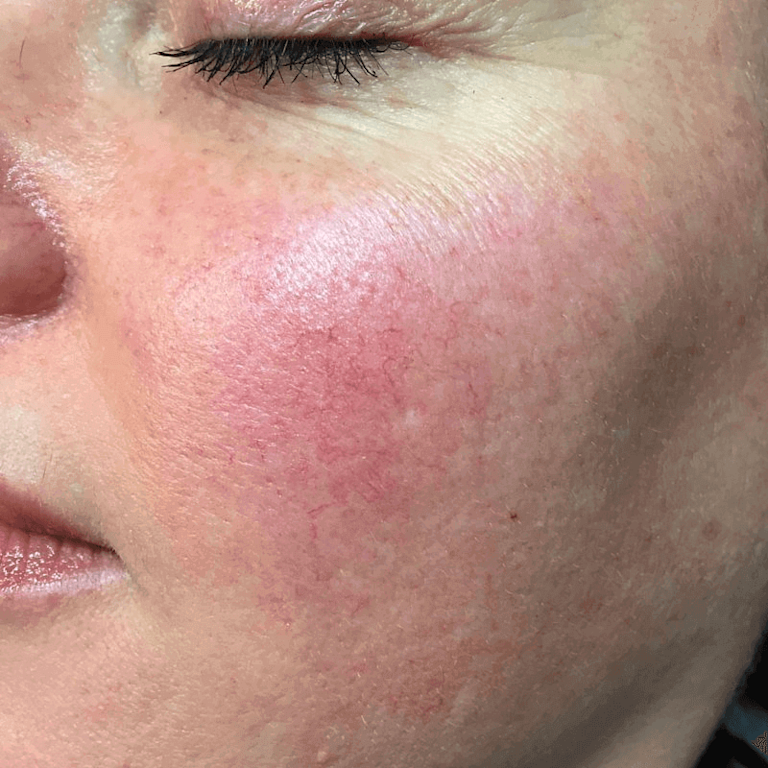
Example of visible/red blood vessels. (Picture 1)
