Post-acne scarring. How does it appear, why, and how to get rid of it?
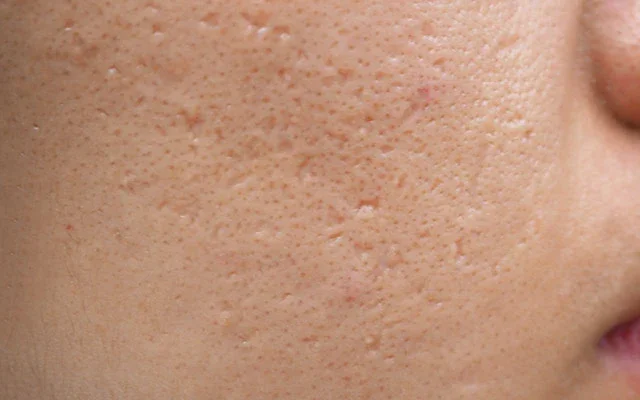
Ice pick atrophic scarring
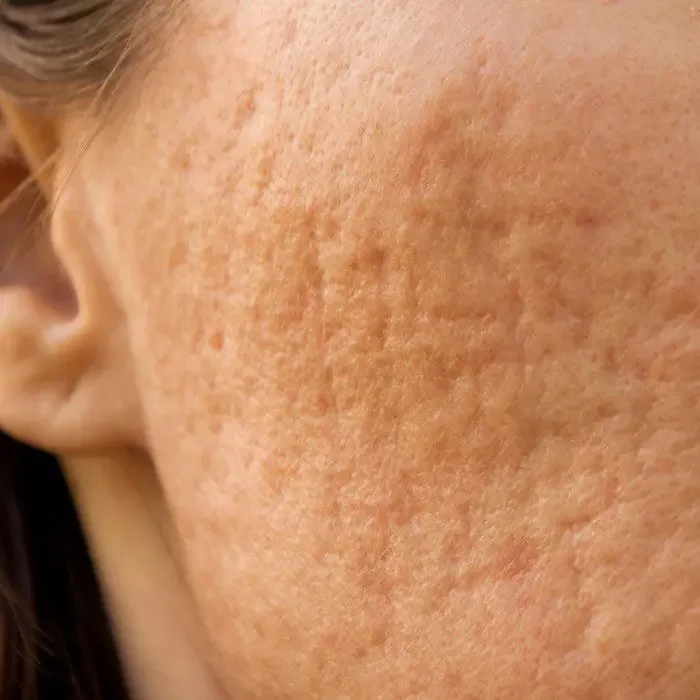
Rolling atrophic scarring
About one out of five people who struggle with acne develop acne scarring. Post-acne scarring results from the inflammation caused by acne blemishes. In some cases, these blemishes are little, and the resulting scars are superficial and heal easily. However, there are times when the inflammation leaks into surrounding tissue, leaving deeper and more visible scars. The skin’s first reaction is to create collagen fibers to repair the damage.
There are two main types of scars: the ones that develop on the spot due to loss of tissue, resulting in an indentation on the epidermis; and there are ones that rise on top of the epidermis. Raised scars appear when the skin overproduces collagen while repairing itself, causing the scar to become elevated.
There is more than just one type of acne scarring, meaning that you can have a combination of different types. There are three types of atrophic scarring:
The first one is ice pick. These scars are narrow and deep. with a small hole at the surface that tapers downward. It is one of the hardest scars to get rid of. They usually appear on upper cheeks, forehead, and where your skin is thinner.
The second one is rolling. Compared to ice pick, they appear where your skin is thicker, like on the jaw and lower cheeks. This type of scars has sloping edges, making your skin look uneven. It reminds me of a wave.
The last one is boxcar. These scars have sharp edges, and they go down deep into the dermis. They also appear on the thicker part, like the jaw and lower cheeks area.
Another category is hypertrophic scars, also known as keloid scars. They are raised above the skin and occur when too much collagen is produced during the healing process. These scars are often itchy or painful and are more likely to appear on the chest, back, shoulders, and jawline.
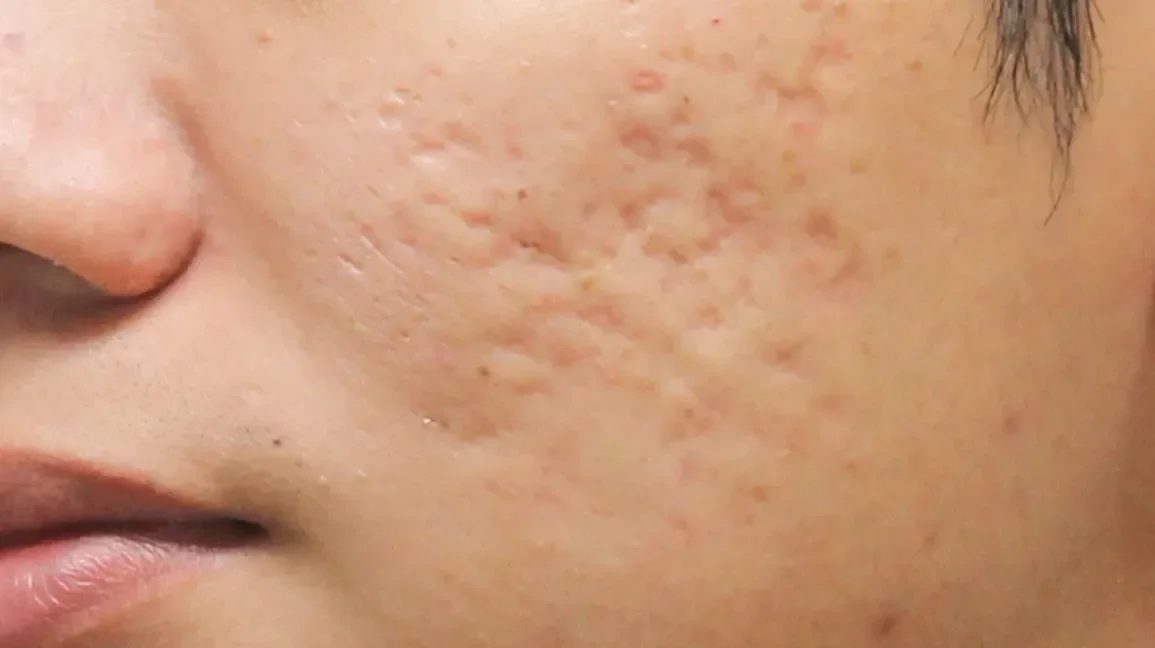
Boxcar atrophic scarring
Different skin types handle acne scarring in their own way. For example, oily skin is more prone to acne breakouts and scarring, due to overproduction of sebum; however, oily skin has a natural moisture barrier that makes the healing process easier and faster. On the other hand, dry skin, due to under production of sebum, could have less acne, but it is prone to inflammation during breakouts. Due to inflammation, there might be more visible scars, and it will take longer to heal. Genetics also play a big role in acne scarring. People with thinner skin are usually more prone to scarring than thicker skin, since thinner skin is more susceptible to damage. Skin tone is another factor. While darker skin tones have increased melanin production, which leads to hyperpigmentation; lighter skin tones often have redness, which can result in long lasting scars, if not treated properly.
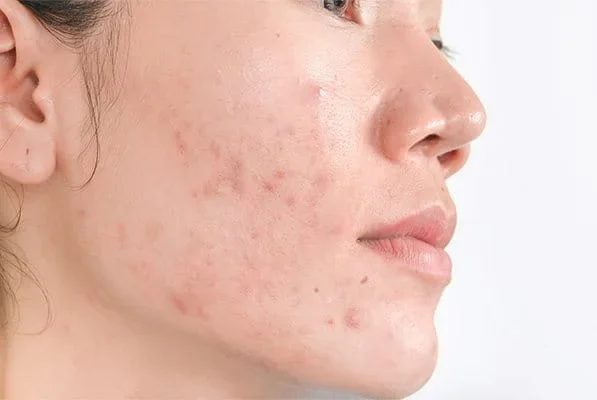
Post-Inflammatory Hyperpigmentation (PIH)
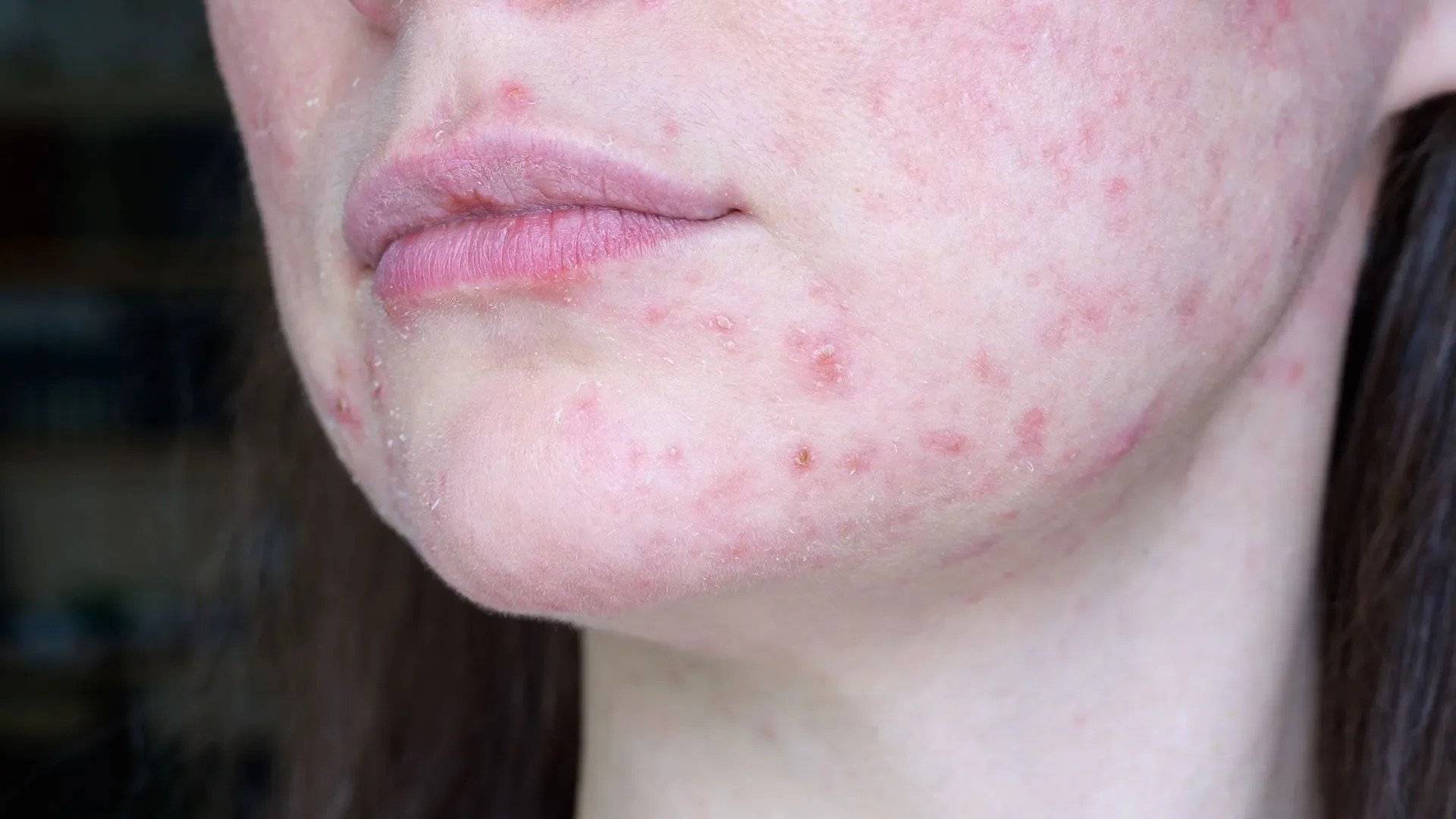
Not all acne breakouts will cause scarring. Most of them start off as hyperpigmentation, or post-inflammatory hyperpigmentation (PIH). PIH develops when a wound or irritation, like a pimple or a rash, cause the skin to become inflamed. While a breakout is still healing, you might have spots which start off as purple or red before going into a deeper tone of the surrounding skin. It happens when overproduction of melanin, or skin pigment, comes onto skin’s epidermis, by trying to restore itself after a pimple. When you try to pop a pimple, your chances of developing PIH rise, since it increases inflammation. In comparison to acne scarring, PIH is flat, and does not damage the follicles on the skin.
Post-Inflammatory Erythema (PIE)
Another type of post acne is post-inflammatory erythema (PIE). PIE and PIH are similar, because they both appear as red or pink patches, but the science behind them is different. PIE results from damaged blood vessels, and the redness that it brings with it, can stay way longer on the epidermis of the skin after the pimple has healed. PIE begins in vascular changes rather than overproduction of melanin. Though, PIE is frequently caused from acne breakouts, it can also occur from skin irritants, like harsh chemicals/treatments or injuries on the epidermis.
While understating the types of post-acne scars is important, preventing them in the first place is just as crucial especially since scarring can be long-lasting and complicated to treat. The first and one of the most effective ones, is to start acne treatment as soon as you see a breakout appear. Salicylic acid works great in controlling breakouts, due to its exfoliation function. It has beta-hydroxy acid (BHA) that aids in removing dead skin cells from epidermis. Another great alternative is benzoyl peroxide, because it kills bacteria, not letting it to spread around and contributing to acne growth. Something you should not be doing is picking pimples. Popping pimples can physically damage your skin and push bacteria deeper, leading to more inflammation. Instead, use pimple patches, and apply them on your breakout. To keep inflammation low, avoid using harsh scrubs, because they will only worsen irritation, and damage your skin barrier, and apply spf every day! It prevents your skin from sun damage, which can slow down the healing process. Also, the sun stimulates melanin production, which will then cause PIH.
If you already have post acne scarring, and you did not read this article beforehand, here are some tips on how to treat it properly. You need to understand that brightening hyperpigmentation and getting rid of acne scars is going to take some time, anywhere from a few weeks to a year. You also need to know that to treat post acne, you cannot have active breakouts, because treatments that are used for each will interfere. Once your breakouts are under control, you can finally focus on targeting the scar and pigmentation left behind with the right treatments.
When looking for acne scarring and pigmentation treatment, look for ingredients that will fasten skin’s renewal process, and exfoliation it. A great example is alpha hydroxy acid (AHA), because it helps to get rid of dead skin and prevent clogged pores. AHA can also make acne scars less visible. Exfoliants with AHA and BHA help remove discoloration and rough skin on the epidermis. For that reason, they are usually labeled as ‘brightening’ treatments. Another medication that speeds up cell turnover is azelaic acid. It also prevents melanin synthesis, which is the ability of your skin to generate pigments that are different from your skin tone. Another ingredient that helps with brightening, is vitamin C, because it also reduces melanin synthesis. It strengthens your skin barrier and is great protection against UV rays (not a replacement for sunscreen though).
Though topical treatment can brighten your complexion and improve the state of your skin, you can’t get rid of post acne completely without cosmetic procedures. When choosing one, aim for it to renew and take off the top layer of your skin. Chemical peels, for example, take off the epidermis, making new skin grow smoother and with fewer scars. Laser resurfacing has a laser that conveys heat to the scarred collagen under the skin. Then, your body releases new healthy collagen, to heal the wound. This stimulates the growth of new skin to replace it. Before getting any of these procedures, consult with a dermatologist to get the most efficient and fast results. If you have any questions, or would like some product recommendation, email here: caspain.glow25@gmail.com.
